

Services and contracting
For example, a software consultancy might hire local staff to implement its products. A contractor bidding for a project should check which classifications or permissions apply before submitting the bid.
Saudi expansion makes sense when you can identify a customer, a reason to operate locally and a credible way to deliver. Start with those three decisions before choosing a company structure or committing to a location.
Assess your market fit
A Saudi presence can help you serve customers on site, build local delivery capacity or operate near suppliers and distribution routes. The advantage depends on how your business earns revenue and what buyers expect from a local provider.
Examples by business activity
For example, a software consultancy might hire local staff to implement its products. A contractor bidding for a project should check which classifications or permissions apply before submitting the bid.

A spare-parts distributor should compare the landed cost of goods, warehouse needs and whether local import or selling activity fits the proposed ownership route.

A producer should compare sites, utilities, inbound materials and customer delivery before committing to a factory. Confirm industrial and operating requirements alongside the budget.
Compare where customers, staff, suppliers and shipments need to be. Visit shortlisted premises and check that the proposed activity can operate there before signing a lease.
Start here if frequent meetings with clients or partners in the capital will shape delivery. Compare where staff will work and how often they need to be on site.
Starting a business in RiyadhAssess Jeddah when your customers are in western Saudi Arabia or your plan depends on Red Sea freight. Compare port access, warehouse locations and inland delivery costs.
Starting a business in JeddahConsider Dammam, Al Khobar and Jubail if you need to be near industrial customers, suppliers or Gulf trade routes. Compare a client-facing office with an industrial site suited to your operations.
Starting a business in Dammam and Al KhobarYes. Companies based in the GCC, the UK, the US and other markets can assess opening a Saudi branch or incorporating a Saudi company. The appropriate route depends on the ownership structure, the proposed business activity and any sector-specific requirements.
For a GCC-registered company, check who ultimately owns it. A company that is fully GCC-owned may qualify for the local route. If there is non-GCC ownership, check whether Saudi investment registration applies. Residence in a GCC country alone does not establish GCC citizenship.

Consider whether you want the overseas company itself to operate through a Saudi branch. Review parent approvals, the manager’s powers and whether the activity can be carried out under that structure.

Consider a Saudi entity if the plan calls for a distinct local company, for example with a different ownership or management structure. Check registration, tax and operating requirements for the proposed model.
Saudi Vision 2030 sets priorities for growing the non-oil economy, attracting investment and developing sectors such as logistics, manufacturing and tourism. Use these signals to identify buyers and projects worth researching, then check the demand and entry requirements for your business.
Approximately how much foreign direct investment flowed into Saudi Arabia in 2025, up 33.5% from 2024. This is the national inflow figure.
Read the official investment figures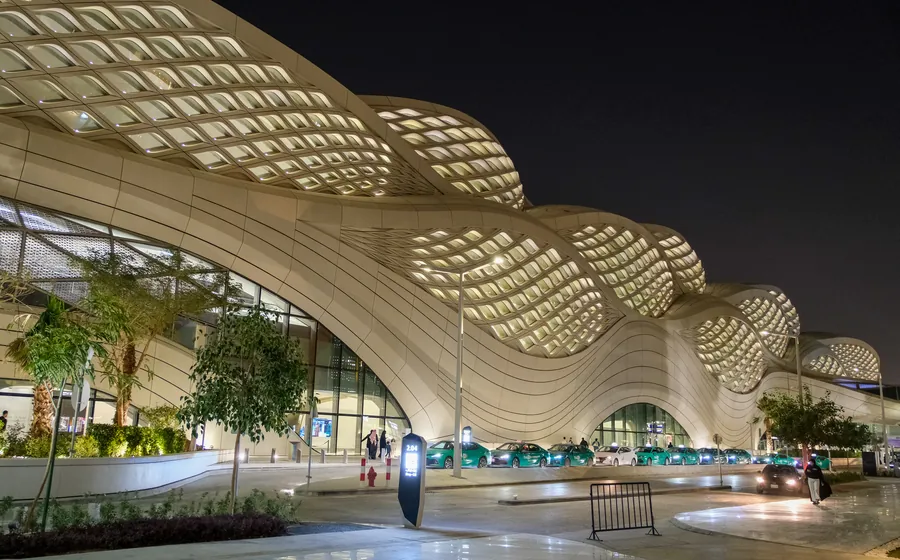
Urban transport
Guinness World Records lists Riyadh Metro as the world’s longest driverless metro network, at 176 km across six lines. If you’re choosing a Riyadh office, check the walk from the nearest station and the commute for your team.
View the Guinness record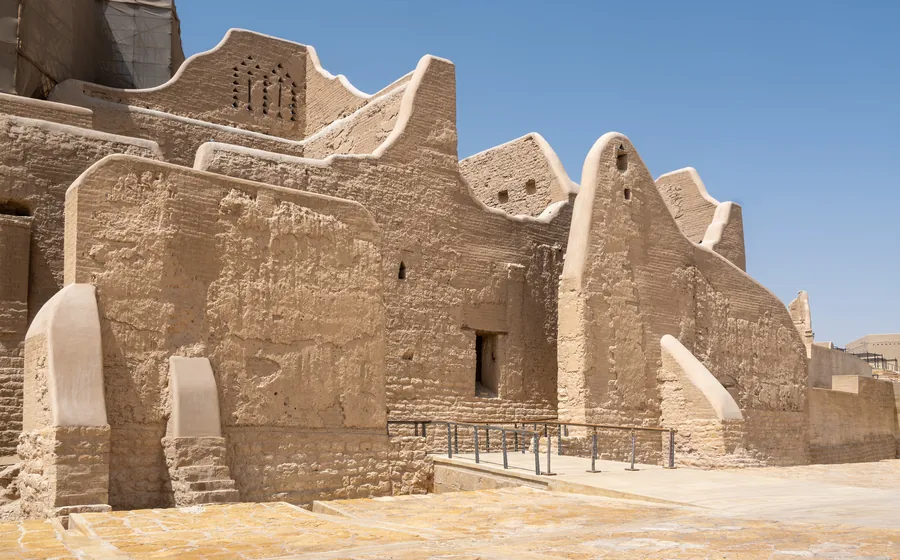
Heritage and hospitality
Bujairi Terrace has welcomed diners since 2022 beside historic At-Turaif. For hospitality and retail teams, it offers a real setting to study how dining and visitor services fit around a heritage site.
Explore Bujairi Terrace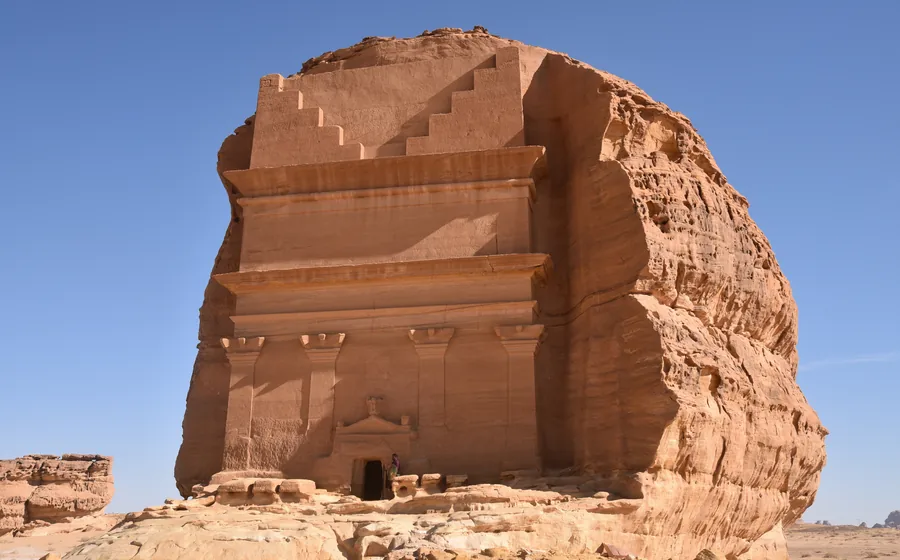
Cultural tourism
The Royal Commission for AlUla is developing tourism and cultural programmes around sites such as Hegra. Tour operators and event suppliers can use the destination to assess visitor demand, transport and seasonality.
Explore the AlUla projectThe tourism destination welcomed its first guests in 2023 and is served by Red Sea International Airport. Hospitality suppliers can assess resort operations, last-mile delivery and demand before committing to a local presence.
Explore the Red Sea projectAramco’s King Abdulaziz Center for World Culture opened in 2018. Its exhibitions, performances and workshops show the kinds of activity an established cultural venue can support.
About IthraKingdom Holding reported active construction on the mixed-use Jeddah Tower in March 2026. Check the latest project status and tender requirements before relying on it in a business plan.
Kingdom Holding’s project updateFIFA selected Saudi Arabia to host the 2034 World Cup. In Al Khobar, Aramco has reported construction of its new stadium. Businesses exploring events, hospitality or logistics should track confirmed procurement notices and venue milestones.
FIFA’s host announcement Aramco’s stadium updateBuild the financial case using ordinary operating costs first. Then check whether a specific incentive applies to the proposed entity, site and activity.

ZATCA’s RHQ rules provide a 30-year period for a 0% income-tax rate on eligible RHQ income and 0% withholding tax on specified payments. The benefit depends on a valid RHQ licence, eligible activities and economic substance. A standard Saudi operating company follows its own tax rules.
Explore RHQ setup
The Cabinet approved cancellation of the expatriate levy on foreign workers in licensed industrial establishments. Verify the facility, licence and worker records for your case and budget separately for other employment and operating charges.
Read what the industrial levy decision coversBring your activity, ownership and shortlist of locations. We’ll help you identify what to verify first.